Scopus: author IDs and indexed-journal checks
Many research offices report on Scopus-indexed output. Discover RIMS supports that in two ways: it stores each researcher’s Scopus Author ID, and it checks every publication’s journal against the Scopus source list. Citation counts and the h-index come from OpenAlex, so the platform does not need a Scopus API agreement.
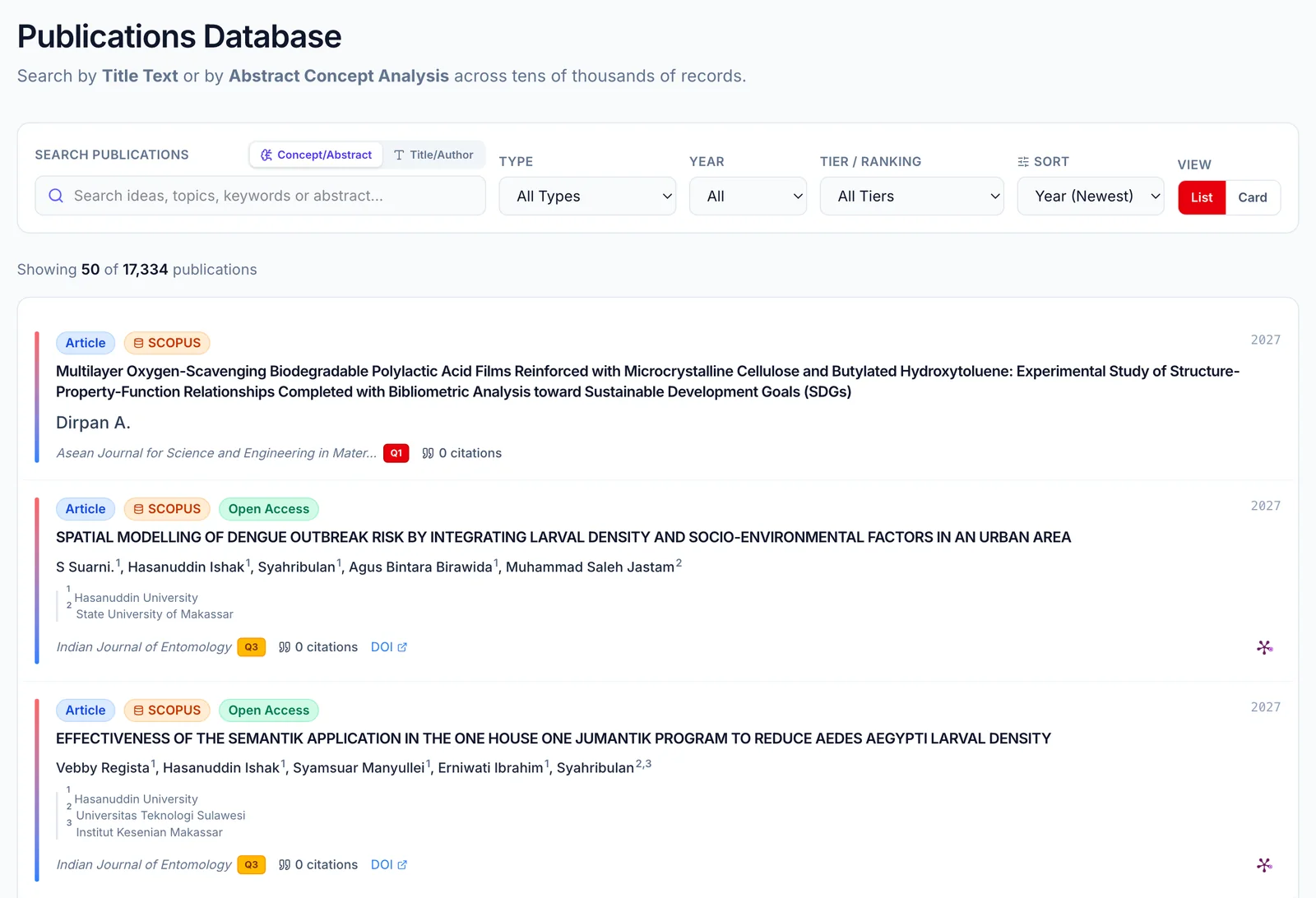
- Role
- Researcher identifier and journal check
- Scopus API
- Not required
- Source list updates
- When an administrator uploads a new list
- Citations and h-index
- From OpenAlex, not Scopus
What Discover RIMS takes from Scopus
Two pieces of Scopus data are used. Neither needs a Scopus API key.
| Data | What it is used for |
|---|---|
| Scopus Author ID | Stored on each researcher, entered by hand or by spreadsheet import. It finds the researcher in OpenAlex when they have no ORCID iD, and links the Scopus badge on their profile to their Scopus author page. |
| Scopus source list | The spreadsheet of Scopus sources that an administrator uploads. The ISSNs and e-ISSNs of active titles are used to flag each publication whose journal is on the list. |
What the Scopus flag means
The Scopus flag is a journal-level check. A publication is flagged when its journal’s ISSN is among the active titles on the uploaded source list. That answers the question most reporting asks, whether the work appeared in a Scopus-indexed journal, but it does not confirm that Scopus holds a record of that particular document.
Analytics shows Scopus-flagged output and other output side by side, year by year. Administrators also choose whether publications found only through Crossref name searches appear on public profiles.
Why citations come from OpenAlex, not Scopus
Using the Scopus APIs in a research information system is tied to the institution’s Scopus subscription, and Elsevier requires a separate agreement when a third party operates the system on the institution’s behalf (Elsevier API policy). Taking citations and author metrics from OpenAlex means Discover RIMS works the same whether or not your institution licenses Scopus.
The consequence is that the citation counts and h-index on a profile are OpenAlex figures. They are usually close to Scopus figures but not identical. Where you need Scopus’s own numbers, for example to check a ranking submission, take them from Scopus.
Keeping the source list current
Scopus adds and discontinues titles over time. Upload the new source list when it changes and run a rescan, and every publication is checked against the new list.
Other sources in the record
No single index covers a university’s output. Each source fills a gap the others leave, and Crossref catches DOIs the rest miss.
- Publications and citations OpenAlex The main source: every work and citation count in a researcher’s record, the countries of their co-authors, and the h-index and i10-index on their profile.
- Researcher identity ORCID The anchor for each researcher. Their ORCID iD finds their works in OpenAlex, and the DOIs on their public ORCID record fill gaps.
- Journal quartiles Scimago Journal quartiles from the SCImago Journal Rank (SJR), behind the Q1–Q4 breakdowns, quartile filters and top-10% journal flags.
Further reading
- Insight Scopus Author ID and ORCID Explained for Research Offices Persistent author identifiers — Scopus Author ID and ORCID — are the foundation of credible researcher metrics. What each is, how to find them, how a...
- Insight OpenAlex vs Scopus: Understanding Coverage Differences OpenAlex covers 250M+ works (open, free API); Scopus covers ~90M (curated, commercial). Each source misses what the other captures — why a RIMS must u...
- Insight CiteScore, SJR and SNIP Compared: Choosing the Right Journal Metric Three Scopus-derived alternatives to Journal Impact Factor — each addressing a different weakness. When to reach for CiteScore, SJR or SNIP.
Sources: Elsevier API policy · Elsevier Developer Portal · What is the Scopus Author Identifier?
Questions about the Scopus integration
Not covered here? Ask us directly
No. The platform does not call the Scopus APIs. It uses the Scopus Author IDs you already hold and the Scopus source list, and takes citations and metrics from OpenAlex.
No. Publications come from OpenAlex, ORCID and Crossref. The Scopus flag shows that a publication’s journal is on the Scopus source list.
Not exactly. Publication counts, citations and the h-index come from OpenAlex, which covers a different set of sources and disambiguates authors differently. Use Discover RIMS for consistent internal tracking, and Scopus or SciVal where you must match an external figure.
Yes. The researcher import template has columns for the ORCID iD and the Scopus Author ID, and administrators can also edit them on a single profile.